
Storytelling
Women & Climate Change
Designer & Developer · Timeframe: 2 months · Solo project
Overview
This project explains how climate change affects everyone, but disproportionately harms women and girls. It highlights how climate related hazards such as extreme heat, flooding, wildfires, hurricanes, drought, and water shortages intensify existing inequalities. The project connects climate change to women's health, pregnancy risks, maternal and infant mortality, domestic violence, unpaid care work, water collection burdens, sanitation challenges, and child marriage, showing that environmental crises often make women's daily lives more dangerous, time consuming, and unequal.
Women as Climate Leaders
Women are not only victims of climate change but essential leaders in climate resilience and action. This project emphasizes women's roles as caregivers, food producers, first responders, environmental stewards, consumers, activists, and political leaders. Its main call to action is to support women-led climate organizations, improve sex disaggregated climate data, vote for and elevate women in decision making roles, and give young women and girls stronger platforms to lead climate solutions.
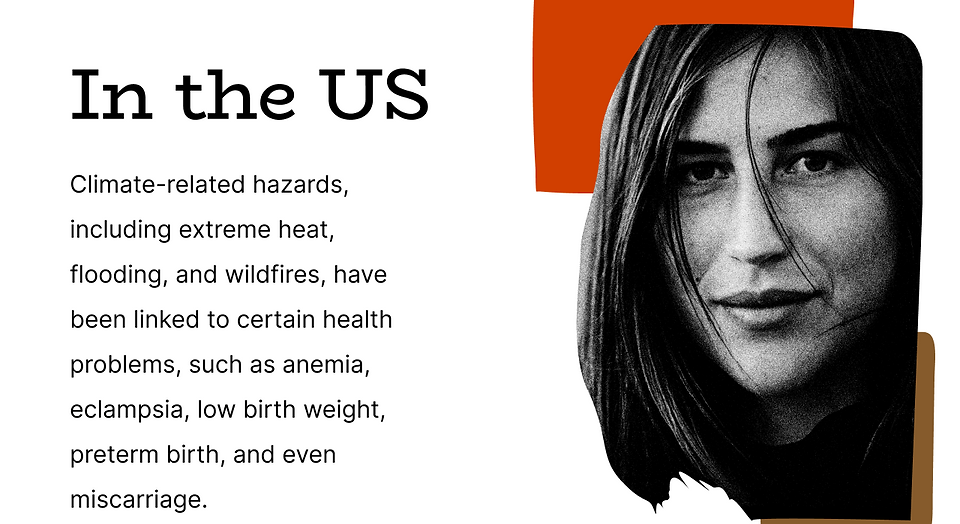
Climate hazards in the US increase maternal health risks including anemia, eclampsia, low birth weight, preterm birth, and miscarriage
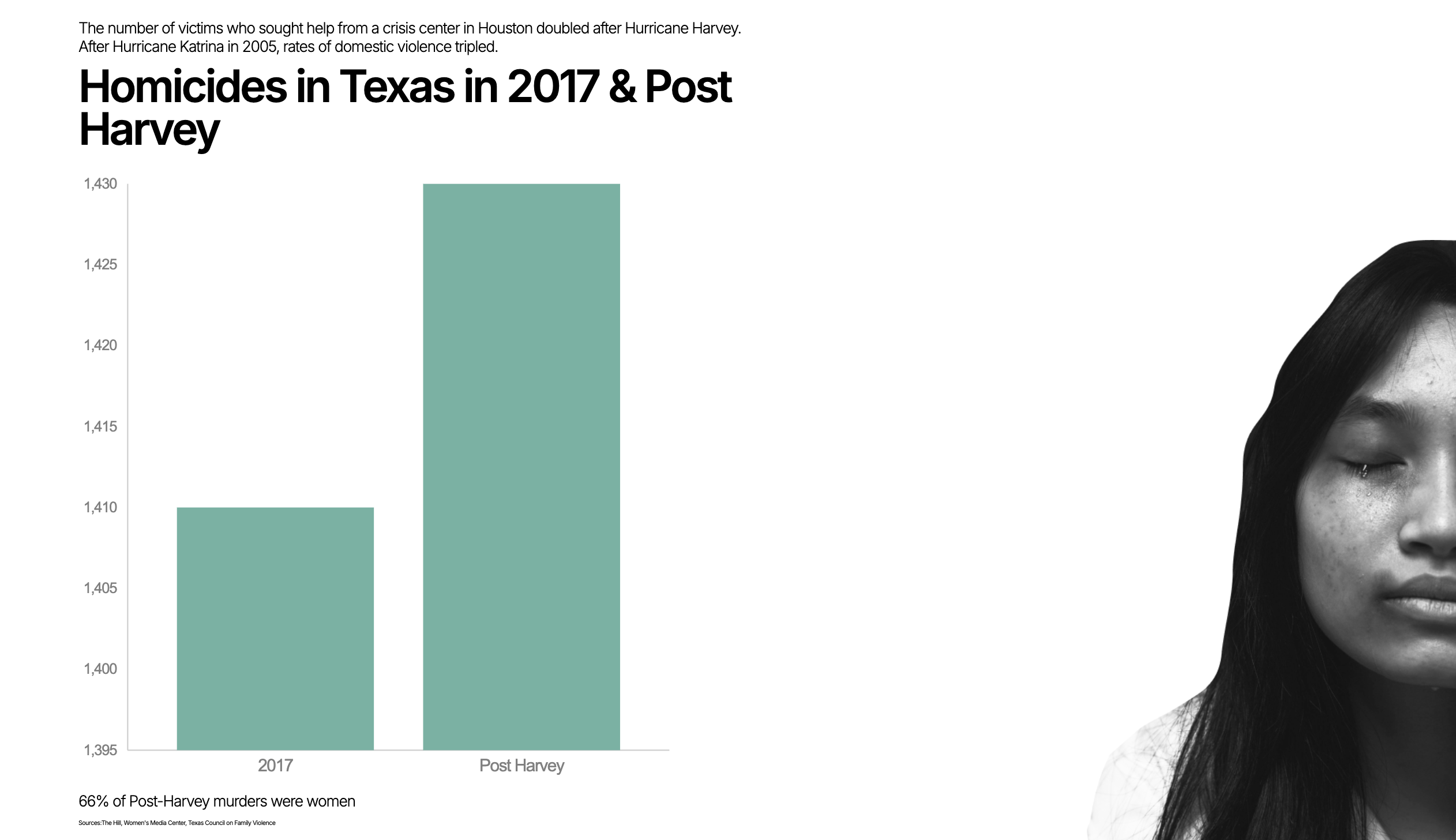
Homicides in Texas increased after Hurricane Harvey, with 66% of post-Harvey murders being women (Sources: The Hill, Women's Media Center, Texas Council on Family Violence)
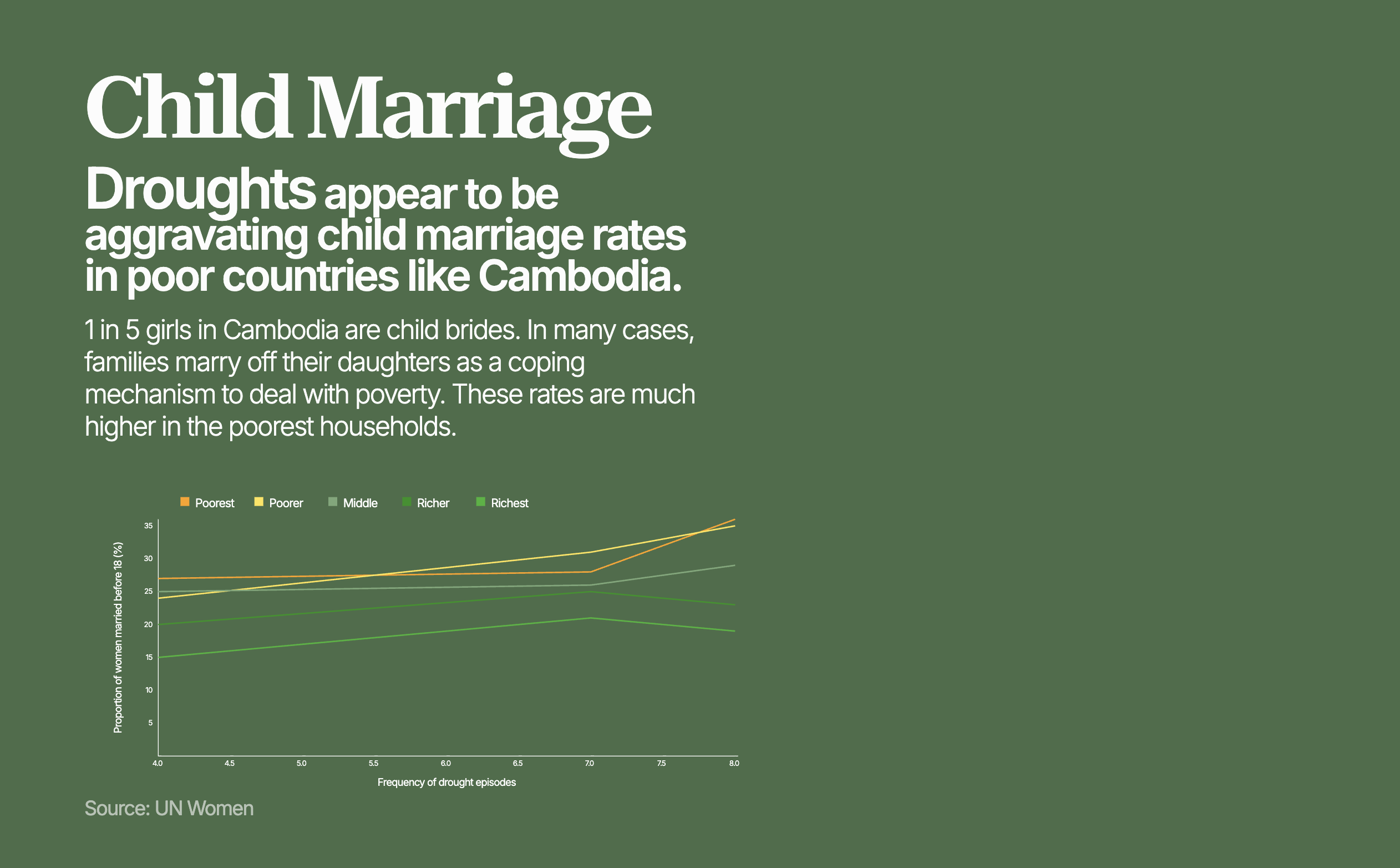
Droughts aggravate child marriage rates in poor countries like Cambodia, with 1 in 5 girls becoming child brides (Source: UN Women)
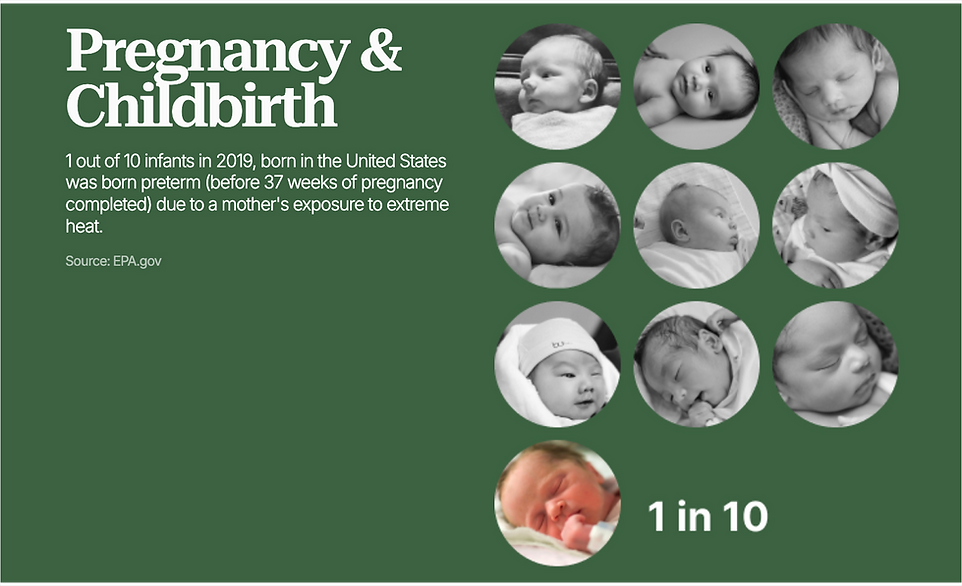
1 in 10 infants are born preterm due to extreme heat exposure during pregnancy (Source: EPA.gov)
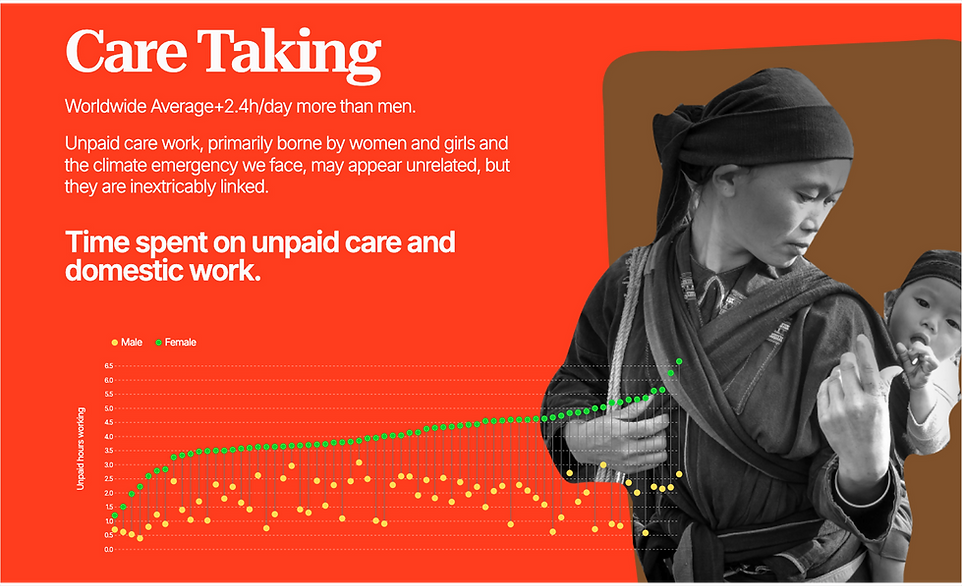
Women spend 2.4 hours per day more than men on unpaid care work and domestic labor
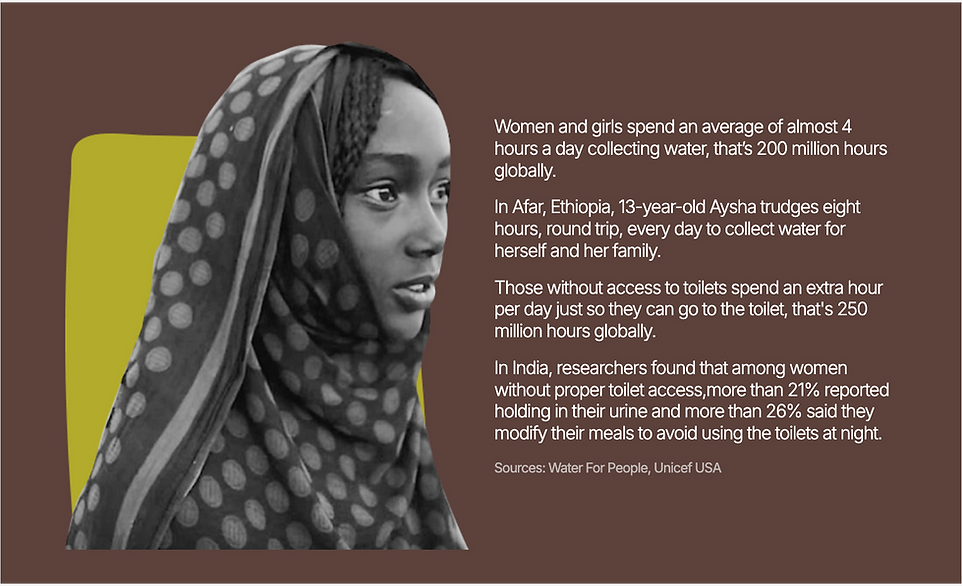
Women and girls spend nearly 4 hours per day collecting water—200 million hours globally—while lack of toilet access adds another hour per day (Sources: Water For People, Unicef USA)
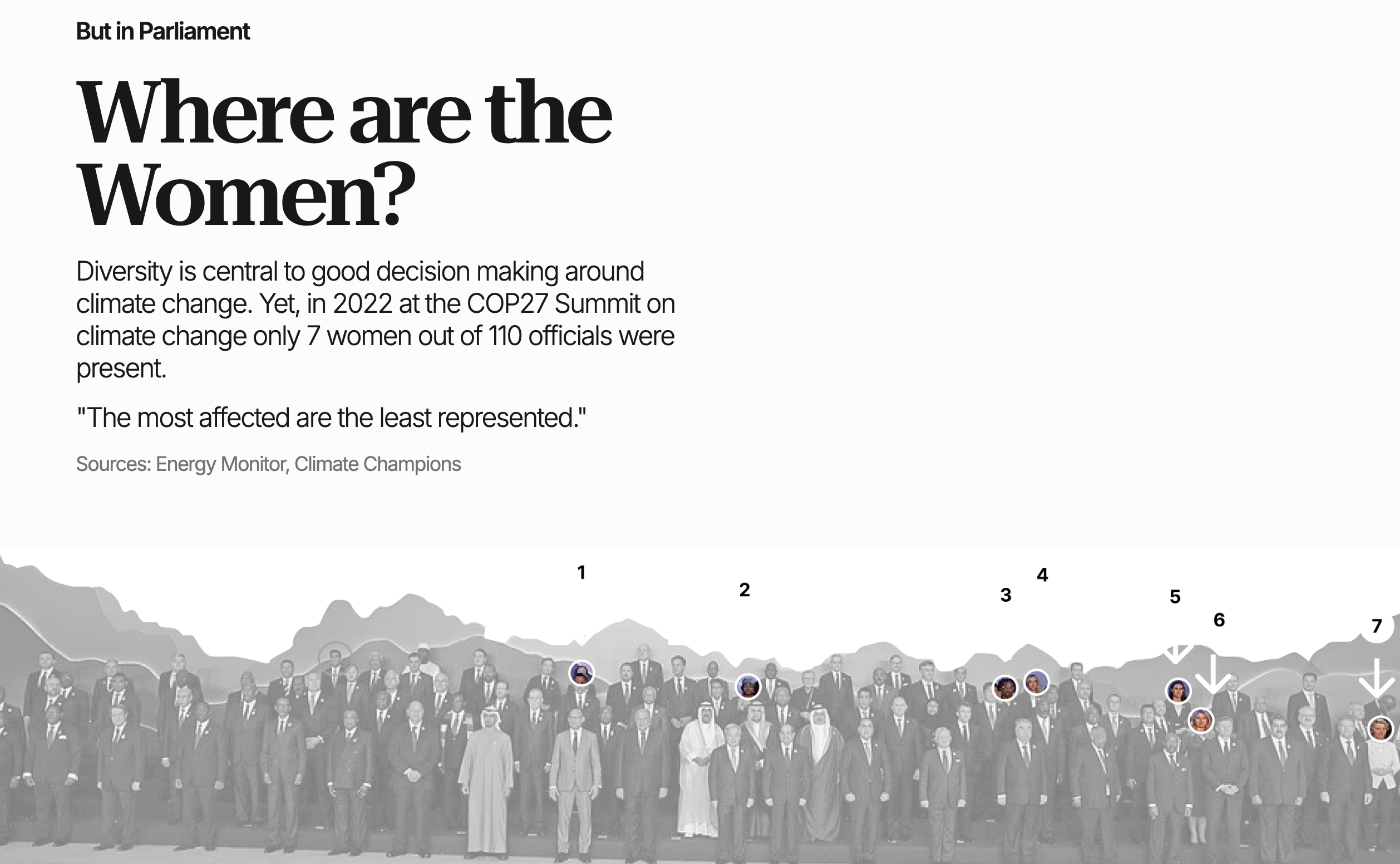
Only 7 women out of 110 officials were present at the COP27 climate summit in 2022—those most affected are the least represented (Sources: Energy Monitor, Climate Champions)